

Entering the 2024-25 season the Florida Gators had questions surrounding their point guard position. While their backcourt had talent in Walter Clayton, Alijah Martin, and Will Richard, none of these players were traditional point guards and all three had spent their careers playing off the ball.
Obviously, this did not end up being a problem for the National Championship winning Gators, who were able to make some ball handling and passing mistakes from the guards without it being too much of an issue on the way to the pinnacle of the sport.
Having done this, you might think that Florida’s coaching staff might choose to build the 2025-26 roster similarly with a bunch of combo guards that don’t have much ball handling experience, but they didn’t. Instead, they went out and got two of the best point guards in the portal in Princeton’s Xaivian Lee and Arkansas’ Boogie Fland, both guys who had the ball a ton operating in ball screens and looking to distribute to teammates.
Last year, the question was who would be able to handle ball handling duties.
This year, the question was how a team could play with two backcourt players who both want the ball.
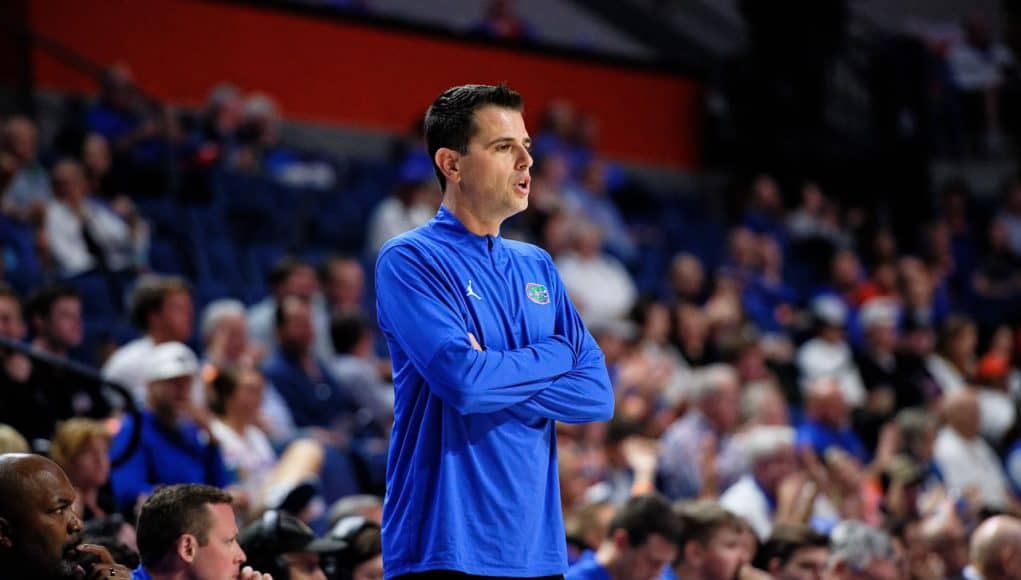
Florida had their first “official” practice on Monday which also meant media availability. When Todd Golden stood up to take questions, of course he was asked about the backcourt and who might be more of the “traditional” point guard. Golden said that in dead ball scenarios it would be Fland, and off missed shots and in transition he didn’t care who brought the ball up the floor.
In terms of the transition and free-flowing attack, it certainly makes sense that Florida wouldn’t be looking for any one particular guard to bring the ball up and get the team into offense. The very reason you build a roster with two point guards is to be able to have versatility in this area and not have to think about which one player could bring the ball up the floor. We also know that Florida wants to play fast, and in order to play at the fastest possible pace you want to have multiple outlet options to move the ball up the floor without needing the same player coming back to get the ball.
The more interesting note was that Fland would be the one bringing the ball up the floor in dead ball scenarios, indicating that, if you had to put a position label on point guard, it would be Fland. When you look at the style of play differences between Fland and Lee, this can make sense on the surface. While Lee is a tremendous passer who has piled up assists in his career he is still someone wired to score first, and when the defense collapses and overplays–that’s when he makes the next read. Fland, on the other hand, is much less of a scorer and someone who does look to get his team into more actions and find teammates earlier. The move from Florida’s coaching staff could definitely be a play to get Xaivian Lee in even more scoring opportunities, and playing less with the ball in his hands would also limit wear and tear where he can now focus on some other elements of the game.
Fland was in the 74th percentile nationally as a pick and roll ball handler last year, and this will be an area where he’ll have tons of opportunity for further success playing with Alex Condon and Rueben Chinyelu. The big area where Fland needs to improve is his finishing on the interior, as last year he shot just 38% at the rim–one of the worst numbers in the country among qualified guards. The other advantage of having Fland handle the ball is that he will often be matched up with opposing point guards, and it will be easy for the Gators to transition into defense and keep that matchup on the other end. While we didn’t know exactly what Florida was going to do offensively with their two point guards, we definitely knew what Florida was going to want to do defensively–as Fland is the far superior defensive player of the two.
With Lee presumably in more of a scoring role, he’ll have to look to improve his catch and shoot numbers. Lee is an excellent shooter off the dribble hitting 41% of these threes last year, but he shot just 26% on catch and shoot threes. Being the primary ball handler for Princeton his shooting off the dribble was much more valuable, but he’ll likely get more catch and shoot opportunities with the Gators. Like Fland, Lee also has to improve his finishing at the rim, especially off of drives which he’ll now get with the Gators out of spot up scenarios. Lee shot 50% at the rim which isn’t disastrous, but watching the film you saw him struggle a lot when being contested.
Ultimately, the Gators have two great options in the backcourt and the greatly increased level of ball handling on the roster will bring a lot of benefit this year. While both Fland and Lee will need to make some adjustments to be more effective in their new roles, they both have the talent and mindset to do so.